Evaluating the UAS Drone Flight Maintenance Log KDP Template for Professional Record Keeping
Maintaining accurate records is a non-negotiable aspect of operating Unmanned Aircraft Systems (UAS), whether for commercial enterprise, regulatory compliance, or asset management. The UAS Drone Flight Maintenance Log KDP template addresses a specific operational need by providing a structured, pre-formatted solution for pilots and fleet managers who utilize Amazon’s print-on-demand platform. Rather than designing a logbook from scratch or relying on disparate digital apps that may lack physical backup, this resource offers a standardized approach to documentation. It serves as both a practical tool for end-users and a viable low-content publishing asset for creators looking to serve the aviation niche.
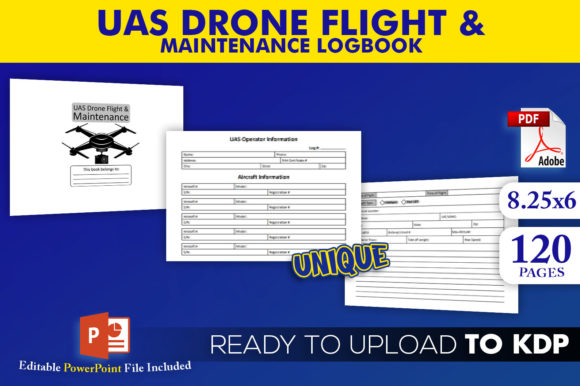
This specific template package distinguishes itself through technical readiness and comprehensive interior design. It is not merely a collection of blank lines; it is a tested file set optimized for the 8.5x6 trim size, which balances portability with sufficient writing space. For professionals evaluating this resource, the value lies in its immediate usability and adherence to industry-standard logging requirements. The inclusion of editable PowerPoint source files alongside print-ready PDFs provides a level of flexibility that generic templates often lack, allowing users to customize fields before printing or publishing.
Core Components and Interior Structure
The effectiveness of any flight log depends entirely on the relevance and layout of its interior pages. This 120-page template is segmented into three critical tracking categories that align with Federal Aviation Administration (FAA) guidelines and general best practices for drone maintenance. Understanding these sections is essential for determining if the UAS Drone Flight Maintenance Log KDP fits specific operational workflows.
- Drone Flight Log: This section captures essential mission data including date, location, pilot name, aircraft registration, flight duration, and purpose. Crucially, it includes space for noting weather conditions and visual observer details, which are vital for post-flight analysis and safety audits.
- Maintenance Log: Preventative maintenance is key to longevity. These pages track repairs, part replacements, firmware updates, and inspection results. Having a dedicated maintenance history separate from flight logs helps isolate mechanical issues from pilot error during incident reviews.
- Battery Charge Log: Lithium-polymer batteries are often the most volatile and expensive consumable in a drone kit. This specialized log tracks charge cycles, voltage readings, storage status, and physical condition. Proper battery logging is frequently overlooked but is essential for predicting failures and managing inventory costs.
The "Belongs To" page at the front adds a layer of professional ownership and identification, which is particularly useful for fleet managers issuing logbooks to multiple pilots or for individuals wanting to secure their intellectual property within the book. The high-resolution interiors ensure that text remains crisp and lines remain sharp after printing, preventing the bleed-through or fuzziness that can plague lower-quality KDP uploads.
Technical Specifications and Platform Compatibility
For publishers and creators, the technical validation of this template is perhaps its strongest selling point. The files have been explicitly tested on KDP, mitigating the common frustration of upload rejections due to margin errors, bleed miscalculations, or font embedding issues. The 8.5x6 trim size is a strategic choice; it is compact enough to fit in a drone case or field bag yet offers significantly more horizontal space than a standard 6x9 notebook. This extra width is necessary for tabular data like flight parameters and maintenance checklists.
The provision of an editable PPTX source file transforms this from a static product into a customizable framework. Users can adjust column widths, add company logos, modify headers to match specific organizational branding, or remove sections that are irrelevant to their specific drone model. For example, a thermal imaging surveyor might need different data fields than a real estate photographer. This editability ensures the UAS Drone Flight Maintenance Log KDP remains relevant across diverse sub-niches within the UAS industry.
Practical Applications for Professionals and Publishers
The utility of this logbook extends across two distinct user groups: the operational pilot and the digital publisher. Each derives value differently, and understanding this duality is important for assessing the product's overall worth.
For Drone Pilots and Fleet Managers
In professional settings, a physical logbook serves as a reliable backup to digital telemetry. Apps crash, tablets run out of battery, and cloud services experience downtime. A physical UAS Drone Flight Maintenance Log KDP provides an immutable record that does not require power or connectivity. For Part 107 certified pilots, maintaining these records demonstrates due diligence during insurance claims or regulatory inspections. The structured format also encourages discipline; when specific fields are printed on the page, pilots are less likely to skip recording minor anomalies that could later indicate systemic problems.
For KDP Publishers and Content Creators
For those in the low-content publishing space, the drone niche represents a high-intent audience with a genuine need for functional tools. Generic notebooks face saturation, but specialized logs like this target a specific pain point. The fact that the interiors are high-resolution and pre-tested reduces production time and risk. Publishers can use the editable source files to create variations—such as a "Thermal Inspection Log" or "Agricultural Spray Log"—thereby building a portfolio of related products without starting from zero. The 120-page count is also optimal for KDP pricing strategies, allowing for a competitive price point while maintaining perceived value.
Assessing Quality and Long-Term Usability
When evaluating the UAS Drone Flight Maintenance Log KDP, one must consider the physical reality of how drones are operated. Field conditions are rarely pristine. While the digital file is high quality, the end-user experience depends on the paper stock used by the print provider. Users should be aware that standard KDP paper is suitable for ballpoint pens and pencils but may bleed with gel pens or markers often used in outdoor gear. This is a limitation of the platform rather than the template itself, but it influences how the log is used in practice.
The consistency of the interior design contributes to long-term usability. When every page follows the same layout, muscle memory develops, making data entry faster and less prone to omission. The separation of battery logs from flight logs is a sophisticated touch that reflects an understanding of actual drone operations. Many generic logs combine these, leading to cluttered entries. By keeping them distinct, this template supports better data hygiene and easier retrospective analysis.
Limitations and Considerations
No single template suits every scenario. Prospective users should recognize that this UAS Drone Flight Maintenance Log KDP is designed for general multirotor and fixed-wing operations. Specialized industrial drones with unique sensor payloads or complex maintenance schedules may require significant customization of the PPTX file to be fully effective. Additionally, while the digital format allows for editing, users unfamiliar with PowerPoint may find advanced layout adjustments challenging. Basic text changes are straightforward, but restructuring tables requires some design competency.
Furthermore, this logbook is a passive tool. It does not automatically sync with flight controller data or generate analytics. It is strictly for manual record-keeping. For operators who require automated telemetry integration, this should be viewed as a complementary compliance document rather than a replacement for digital fleet management software. However, for the vast majority of independent pilots and small businesses, manual logging remains the most accessible and legally defensible method of record retention.
Determining Fit for Your Workflow
The decision to adopt or publish the UAS Drone Flight Maintenance Log KDP should be based on specific operational or business goals. For pilots, ask whether your current record-keeping system would withstand an audit or insurance investigation. If your records exist only in scattered notes or unorganized app exports, this structured logbook fills a critical compliance gap. The 8.5x6 form factor specifically suggests it is intended for serious users who need more data density than a pocket notebook can provide.
For publishers, evaluate the current competition in the drone log category. Many existing options are poorly formatted or lack battery-specific tracking. This template’s inclusion of tested files and editable sources offers a competitive advantage in quality and adaptability. The ability to verify KDP compatibility before purchase saves significant development time and prevents account warnings associated with repeated upload failures.
Ultimately, the value of this resource is rooted in its specificity. It avoids the trap of being a generic notebook masquerading as a technical tool. Whether used to maintain a personal fleet of DJI Matrice units or published as a niche product for the growing community of FPV racers and commercial surveyors, the UAS Drone Flight Maintenance Log KDP provides a professional foundation. It bridges the gap between regulatory necessity and practical field utility, offering a tangible solution to the abstract requirement of documentation. In an industry where safety and accountability are paramount, having a reliable, well-structured log is not just administrative work—it is a component of professional airmanship.