Evaluating the Project Schedule Planner KDP Interior for Low-Content Publishing
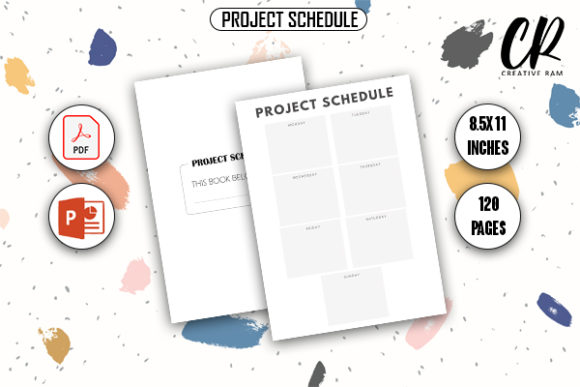
Selecting the right interior template is often the most critical decision in low-content publishing. For creators targeting the productivity and project management niche, the Project Schedule Planner - KDP Interior offers a specific solution designed to bridge the gap between generic notebooks and specialized business tools. This resource provides a pre-formatted 120-page layout at 8.5″ x 11″ inches, complete with bleed settings and editable source files. However, understanding whether this specific asset aligns with your publishing strategy requires looking beyond the feature list to evaluate its practical application, customization potential, and market fit compared to other available options.
Defining the Asset and Technical Specifications
The Project Schedule Planner - KDP Interior is distinct from standard lined or dotted journals because it serves a functional purpose rather than an open-ended one. It is engineered specifically for Amazon’s print-on-demand ecosystem. The 8.5″ x 11″ dimension is the industry standard for professional planners, offering sufficient surface area for Gantt charts, task lists, and milestone tracking without feeling cumbersome. The inclusion of bleed is a significant technical detail; it ensures that design elements extending to the edge of the page are trimmed correctly during manufacturing, preventing unwanted white borders that often plague amateur submissions.
Beyond the static PDF, the provision of PPTX (PowerPoint) source files changes the nature of this product. Most KDP interiors are sold as locked PDFs, forcing publishers to accept the layout exactly as designed. The editable PPTX format allows for granular control over fonts, headers, and spacing. This capability is essential for creators who wish to differentiate their listing in a saturated marketplace. Instead of publishing an identical interior to dozens of other sellers, you can modify branding elements, adjust column widths, or add proprietary sections that add unique value to the end user.
Comparing Pre-Made Interiors vs. Custom Design
When researching resources for KDP, publishers typically face a choice between buying pre-made templates like this Project Schedule Planner, using automated generation tools, or designing from scratch. Each approach carries distinct tradeoffs regarding time investment, quality, and uniqueness.
Designing from scratch using Adobe InDesign or Affinity Publisher offers maximum originality but requires advanced typographic skills and significant time. A single error in margin settings or bleed configuration can result in rejected uploads or poor customer reviews. Conversely, automated KDP interior generators provide speed but often lack the thoughtful UX required for a complex project planner. They may generate lines and boxes, but they frequently miss the logical flow needed for actual project management, such as adequate space for notes or clear visual hierarchy between weekly and monthly views.
The Project Schedule Planner - KDP Interior occupies a middle ground. It provides a professionally structured foundation that has likely been tested for print readiness, reducing the risk of technical rejection. Compared to fully custom designs, it saves dozens of hours of layout work. Compared to automated tools, it offers superior usability and aesthetic coherence. The primary tradeoff is that the base structure is not unique to you. Success with this option depends entirely on how effectively you utilize the PPTX source files to customize the experience and create a distinct product identity.
Evaluating Niche Fit and User Intent
Not all planners serve the same audience. Before acquiring this interior, it is necessary to determine if its structure matches the intent of your target demographic. Project schedule planners differ significantly from daily diaries, academic planners, or wellness journals. They are utilitarian tools used by professionals, students managing capstone projects, or homeowners overseeing renovations.
This specific 120-page format suggests a focus on medium-to-long-term planning rather than daily journaling. A 120-page count at 8.5″ x 11″ creates a substantial volume that feels like a serious workbook. If your research indicates a demand for "quick capture" notebooks or pocket-sized trackers, this large-format, high-page-count option would be a mismatch. However, if keyword research reveals demand for terms like "construction timeline log," "freelance project tracker," or "business goal planner," the specifications of this interior align well with those needs. The utility of the interior must match the specificity of the keywords you intend to target.
Strategic Customization and Differentiation
Possessing the PPTX source files is only advantageous if you have a strategy for modification. Simply uploading the provided PDF without alteration is rarely a sustainable long-term strategy due to duplicate content issues on Amazon. Effective use of this Project Schedule Planner - KDP Interior involves treating the template as a starting point rather than a final product.
- Branding Integration: Use the editable files to insert consistent headers, footers, and logo placements that match your cover design. This creates a cohesive brand experience that generic templates lack.
- Niche-Specific Terminology: Rename generic fields to match your audience. Changing "Task" to "Patient Follow-Up" for medical administrators or "Scene Setup" for event planners instantly increases relevance.
- Instructional Content: Utilize the first few pages to add value. Because the file is editable, you can insert guides on how to use the planner effectively, which improves perceived value and reduces returns.
- Layout Adjustments: Test the writing space. If your audience uses fountain pens or markers, you may need to increase line spacing or box sizes within the PPTX file before exporting the final PDF.
These modifications transform a commodity asset into a specialized tool. The ability to make these changes is the primary differentiator between this product and lower-cost, non-editable alternatives.
Assessing Print Quality and Production Constraints
Digital appearance does not always translate to physical quality. When evaluating any KDP interior, including this Project Schedule Planner, one must consider the realities of Amazon’s printing process. Standard color printing on KDP uses lighter paper stock than premium offset printing. Heavy ink coverage, solid black backgrounds, or intricate grayscale gradients can sometimes lead to bleed-through or muddiness.
A strength of this specific interior specification is its likely adherence to print-safe design principles. Professional KDP templates typically avoid heavy ink saturation to ensure crisp reproduction on standard 55# or 60# paper. However, when customizing the PPTX files, users must remain vigilant. Adding dark decorative elements or changing font colors to deep saturations can inadvertently compromise print quality. Always order a physical proof after making significant edits to verify that the contrast remains high and that text is legible under various lighting conditions. The "High-Quality Print Ready PDF" claim should be validated through personal testing, especially after customization.
Decision Factors: When to Choose This Resource
Determining whether the Project Schedule Planner - KDP Interior is the correct investment depends on your current stage in the publishing journey and your technical comfort level. This resource is generally best suited for publishers who understand the basics of KDP but want to accelerate their entry into the competitive planner niche without hiring a freelance designer.
It is an appropriate choice if:
- You have identified a specific sub-niche within project management but lack the design skills to create a functional layout from zero.
- You possess basic proficiency in PowerPoint or similar presentation software and are comfortable manipulating master slides and layouts.
- You want to test market demand quickly with a professional-looking product before investing in bespoke design.
- You require a bleed-ready template to avoid common formatting rejections associated with DIY designs.
Conversely, this may not be the right fit if:
- You are looking for a completely passive income stream with zero additional work. The need for customization means this is an active creation tool, not a "upload and forget" asset.
- Your target niche requires non-standard dimensions. If you need a 6x9 travel planner or an 8x10 square workbook, the fixed 8.5x11 size will require resizing that could distort the layout.
- You lack access to software capable of editing PPTX files or converting them to high-resolution PDFs reliably.
- Your brand relies entirely on hand-drawn or organic aesthetics. The structured, grid-based nature of project planners may conflict with artistic or freeform journal brands.
Balancing Cost, Time, and Market Viability
Ultimately, the value of the Project Schedule Planner - KDP Interior is calculated by weighing the cost of acquisition against the time saved and the potential for sales. In the context of KDP publishing, time is often the scarcest resource. Spending three weeks learning InDesign to create a planner that might fail in the market is a high-risk endeavor. Utilizing a pre-vetted, editable template reduces the development cycle to days, allowing for faster iteration and testing.
However, buyers must remain realistic about market saturation. A high-quality interior is a prerequisite for success, not a guarantee. The editable nature of this product mitigates the risk of duplication, but it places the burden of differentiation squarely on the publisher. Those who view this interior as a collaborative tool for building a unique product will likely find it a valuable addition to their workflow. Those expecting it to function as a standalone turnkey solution may find themselves competing directly with others who purchased the same asset.
By carefully evaluating the technical specifications, understanding the necessity of customization, and aligning the format with specific user intent, publishers can make an informed decision about integrating this resource into their catalog. The Project Schedule Planner - KDP Interior represents a pragmatic balance between professional quality and accessible customization, serving as a viable foundation for those willing to put in the strategic effort to make it their own.