Chronic Pain Journal for KDP: A Practical Tool for Tracking, Managing, and Understanding Daily Symptoms
Living with chronic pain requires more than just medical treatment; it demands consistent self-awareness and detailed record-keeping. For individuals navigating complex health journeys, the Chronic Pain Journal for KDP serves as an essential bridge between daily experiences and clinical insights. This specialized 6x9 inch tracking tool is designed specifically to help patients, caregivers, and low-content publishers create or utilize a structured system for monitoring symptoms, triggers, and lifestyle factors. Whether you are seeking to better understand your own body or looking for a high-quality, ready-to-publish resource for the Amazon KDP marketplace, this journal provides a comprehensive framework for turning subjective pain into actionable data.
Addressing the Challenges of Pain Management and Record Keeping
One of the most significant hurdles in managing chronic conditions is the "recall bias" that occurs during doctor visits. When asked about pain levels over the past month, patients often struggle to remember specific details regarding intensity, timing, or correlating factors like weather and diet. Generic notebooks lack the structure necessary to capture this multidimensional data effectively. The Chronic Pain Journal for KDP addresses this gap by providing a pre-formatted layout that prompts users to record critical variables before they are forgotten.
For publishers and content creators, the challenge lies in sourcing interiors that are both functional and compliant with KDP specifications. Many available templates suffer from poor margin alignment, bleed issues, or insufficient page counts for paperback publishing. This specific journal template resolves these technical pain points. With a verified printing cost of $2.29 USD and a total of 120 pages, it offers a profitable and professional solution that has already been tested in the KDP previewer. The availability of editable source files in PDF, PPTX, and Keynote formats means users can customize the interior without needing expensive design software, making it accessible for creators at any skill level.
Structured Daily Tracking for Comprehensive Health Insights
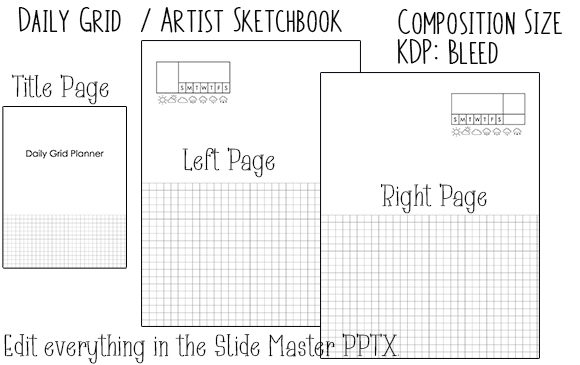
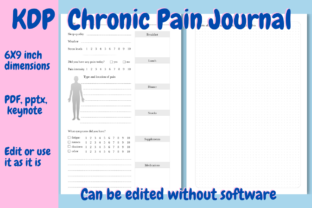
The core value of this journal lies in its intelligent two-page daily spread. Unlike standard diaries, the Chronic Pain Journal for KDP separates quantitative data from qualitative reflection, allowing for a holistic view of health.
The Left Page: Quantitative Metrics and Intake
The left-hand page functions as a structured dashboard. It eliminates the guesswork by providing dedicated fields for:
- Sleep Quality and Weather: Recognizing environmental and rest-related triggers.
- Pain Specifics: Recording intensity scales, anatomical location, and pain type (e.g., throbbing, sharp, dull).
- Nutritional and Medication Log: Detailed sections for breakfast, lunch, dinner, snacks, supplements, and medications.
- Stress Levels: A crucial metric often linked to flare-ups.
This structured approach ensures that no variable is overlooked. For someone managing fibromyalgia or arthritis, seeing a correlation between barometric pressure changes and pain spikes across 110 days of data can be transformative for treatment planning.
The Right Page: Qualitative Reflection and Pattern Recognition
While data points are essential, the narrative context provides meaning. The right-hand page features a dotted grid, offering flexibility for free-form journaling. This space allows users to elaborate on symptoms, document emotional well-being, and note what interventions helped or failed on a given day. The dot grid format is particularly effective because it supports handwriting, sketching body maps, or creating custom charts without the visual clutter of rigid lines. This balance between structured metrics and open reflection makes the Chronic Pain Journal for KDP a versatile tool for diverse user needs.
Technical Specifications and Customization for Publishers
For those utilizing this resource as a KDP product, technical precision is non-negotiable. This journal is engineered to meet Amazon’s strict publishing guidelines while maximizing usability for the end customer.
- Dimensions: 6 x 9 inches, the industry standard for portable journals.
- Page Count: 120 pages total, including front matter and back notes.
- Interior: Black and white with no bleed, ensuring crisp printing and lower production costs.
- File Flexibility: Provided in PDF for immediate upload, plus PPTX and Keynote for editing.
The inclusion of editable source files is a significant advantage. Publishers can add their brand name to the copyright page, modify the initial evaluation section, or adjust the goals page to target specific niches such as migraine tracking, post-surgical recovery, or physical therapy progress. Because the files can be edited without specialized graphic design software, creators can rapidly iterate and test different variations in the marketplace.
Practical Applications Across Different User Groups
The utility of the Chronic Pain Journal for KDP extends beyond a single demographic. Its design accommodates various approaches to health management and business development.
For Patients and Caregivers
Users can leverage the initial evaluation and goals pages to establish baselines and set realistic health objectives. Over the course of 110 days, the journal becomes a powerful advocacy tool. Bringing this completed record to a specialist appointment provides concrete evidence of treatment efficacy or side effects, facilitating more informed medical decisions. The three additional notes pages at the end serve as a repository for questions to ask doctors, appointment summaries, or emergency contact information.
For KDP Publishers and Coaches
Health coaches and wellness practitioners can use this template as a lead magnet or a complementary product to their services. By customizing the title page and branding elements, professionals can offer a tangible resource that reinforces their methodology. The low printing cost of $2.29 allows for competitive pricing while maintaining healthy royalty margins. Furthermore, because the interior is no-bleed, it reduces the risk of printing errors and returns, protecting the publisher's account health.
Maximizing the Value of Your Journaling Practice
To get the most out of this resource, consistency is key. Users should aim to complete entries at the same time each day to establish a routine. For publishers, consider creating a companion guide or digital download that explains how to analyze the collected data. If you want to increase the number of pages or adapt the layout for specific conditions, the editable PPTX and Keynote files make expansion straightforward. You might add weekly review sections, gratitude prompts, or specialized symptom trackers depending on your target audience's unique requirements.
Ultimately, the Chronic Pain Journal for KDP represents a convergence of practical health management and smart publishing strategy. It transforms the overwhelming experience of chronic pain into manageable, trackable components while providing creators with a professionally vetted, cost-effective asset. Whether used for personal healing or as a foundation for a low-content publishing business, this journal delivers structure, clarity, and tangible results in a format that respects both the user's journey and the publisher's bottom line.