KDP Trading Log Book Interior: A Complete Resource for Publishers and Traders
Creating a successful low-content or medium-content book on Amazon KDP requires more than just a catchy cover; it demands a functional, high-quality internal structure that provides genuine value to the end user. For publishers targeting the financial niche, a KDP Trading Log Book Interior serves as the foundational asset that determines whether a customer will leave a five-star review or return the product in frustration. This specific type of interior is designed to help day traders, swing traders, and long-term investors track their market activities, analyze performance, and maintain emotional discipline through structured journaling.
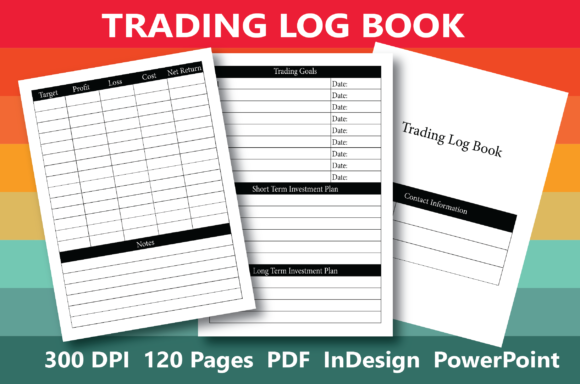
When sourcing or designing a KDP Trading Log Book Interior ready to upload to KDP, you are acquiring a comprehensive production package. Typically formatted at 8.5″ x 11″ with 120 pages, this resource bridges the gap between a simple notebook and a professional trading tool. Whether you receive the final output as a print-ready PDF file at 300 dpi, an editable InDesign file, or a customizable PowerPoint template, understanding how to leverage these assets is crucial for meeting the practical needs of adult traders seeking to improve their market performance.
Understanding the Core Purpose of a Trading Journal
To effectively market or utilize a trading log book, one must first understand the specific challenges traders face. The primary goal of this interior is not merely data entry; it is behavioral modification and performance analytics. Traders often struggle with emotional decision-making, lack of consistency, and failure to learn from past mistakes. A well-structured KDP Trading Log Book Interior addresses these pain points by forcing the user to pause and document specific metrics before, during, and after a trade.
Unlike a generic ledger, a specialized trading interior includes fields tailored to financial markets. These typically encompass entry and exit prices, stop-loss levels, take-profit targets, position sizing, and risk-to-reward ratios. More importantly, high-quality interiors include sections for psychological assessment and strategy notes. This transforms the book from a passive record into an active coaching tool. When you offer a product that facilitates this level of introspection, you are solving a critical problem for your audience: the inability to objectively review their own trading psychology.
Technical Specifications and Upload Readiness
For self-publishers, the phrase "ready to upload to KDP" signifies a significant reduction in production time and technical risk. A standard KDP Trading Log Book Interior comes pre-formatted to meet Amazon’s strict printing guidelines. The 8.5″ x 11″ trim size is the industry standard for log books because it offers ample horizontal space for wide tables and charts without requiring the user to write in cramped margins. The 120-page count is strategically chosen to provide enough volume for several months of daily tracking while keeping the spine width sufficient for legible text and maintaining a competitive printing cost.
The resolution of the source files is non-negotiable. A 300 dpi PDF file ensures that grid lines, table borders, and instructional text remain crisp and professional when printed on standard white paper. Blurry or pixelated interiors are the most common cause of negative reviews in the low-content category. Furthermore, having access to the original InDesign or PowerPoint files adds a layer of versatility. While the PDF is ready for immediate publication, the source files allow you to modify headers, adjust column widths for specific asset classes like crypto or forex, or rebrand the interior to create a unique product line distinct from competitors using the same base template.
Practical Applications for Different Trading Styles
One of the strengths of a versatile KDP Trading Log Book Interior is its adaptability to various user personas. Adults approaching this topic do so with different goals, and the interior should accommodate these nuances.
- Day Traders: These users require high-frequency logging capabilities. They benefit from interiors that feature multiple entries per page or condensed rows, allowing them to track dozens of scalps or intraday moves without wasting paper. For this demographic, speed of documentation is as important as detail.
- Swing Traders: Users who hold positions for days or weeks need more vertical space per entry. They utilize the notes section extensively to track market sentiment, news catalysts, and technical chart patterns. A layout with larger "Trade Rationale" and "Post-Trade Review" boxes serves this group best.
- Beginners and Students: New traders often use log books as educational scaffolding. They benefit from interiors that include instructional prompts, definitions of key terms, or pre-printed checklists for trade validation. If your interior includes these educational elements, it becomes a hybrid workbook and journal.
By understanding these distinctions, publishers can either select the most universally applicable design or create variations using the editable source files to target specific sub-niches within the trading community.
Maximizing Value Through Customization and Implementation
Acquiring a KDP Trading Log Book Interior is only the first step. To truly stand out in a saturated marketplace, implementation strategy matters. If you are using the provided PowerPoint or InDesign files, consider adding value-added content that generic templates lack. This might include monthly review spreads, quarterly profit-and-loss summary pages, or habit trackers specifically designed for trading routines. These additions increase the perceived value of the book and justify a higher price point.
For traders purchasing these books, the implementation phase involves establishing a consistent routine. The physical act of writing in a log book creates a tactile feedback loop that digital spreadsheets cannot replicate. It slows down the impulsive mind. Users should be encouraged to treat the log book as part of their pre-market preparation and post-market debriefing. When marketing this product, emphasize this ritualistic aspect. You are not selling paper; you are selling discipline, accountability, and the potential for improved financial outcomes.
Quality Assurance and User Experience Considerations
Even with a professional KDP Trading Log Book Interior ready to upload to KDP, creators must perform due diligence. Always order a proof copy before launching. Check the bleed settings to ensure no table lines are cut off during trimming. Verify that the grayscale contrast is sufficient; light gray lines may look elegant on screen but can disappear entirely on standard KDP paper. Ensure there is adequate margin space on the inner gutter so that users do not have to break the spine to write in the columns near the binding.
Additionally, consider the paper opacity. Standard KDP white paper is 55# (90 GSM). Heavy ink usage or marker highlighting can cause bleed-through. Designing the interior with single-sided printing in mind, or ensuring the reverse side of each page has a pattern or blank space rather than another dense table, can significantly enhance the user experience. These thoughtful design choices demonstrate a commitment to quality that resonates with adult consumers looking for professional-grade tools.
Strategic Positioning in the Financial Niche
The financial self-help and tracking niche is evergreen because the desire for financial independence is constant. However, trust is paramount. A KDP Trading Log Book Interior must convey competence. Avoid cluttered designs or overly decorative fonts that distract from functionality. Clean, minimalist aesthetics with clear typography suggest professionalism and reliability. When describing your book, focus on the outcomes facilitated by the interior: better risk management, clearer pattern recognition, and reduced emotional trading.
Ultimately, the success of a trading log book lies in its utility. By leveraging a high-quality, properly formatted interior package—complete with 300 dpi PDFs and editable source files—you position yourself to deliver a product that genuinely assists traders in their journey. Whether you are a publisher building a portfolio or a trader seeking a better system, focusing on the functional integrity of the interior is the key to achieving sustainable results in both publishing and trading.