KDP Template: Tattoo Artist Sketch Book Guide
Creating a successful low-content book on Amazon requires more than just uploading a generic PDF. It demands a balance of professional formatting, niche relevance, and unique value. The KDP Template - Tattoo Artist Sketch Book serves as a foundational resource for publishers looking to enter the body art and design niche without starting from scratch. This digital asset provides a structured interior specifically designed for tattoo enthusiasts, artists, and collectors who need a dedicated space for visual concepts and technical notes.
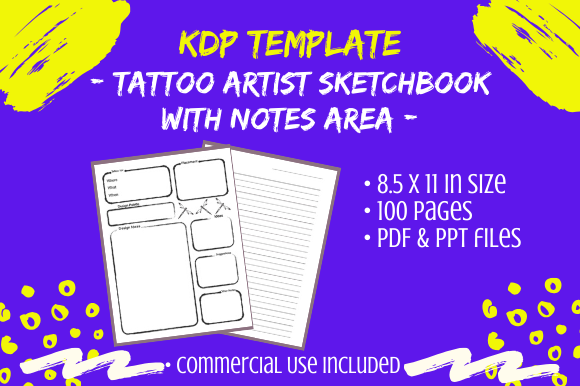
At its core, this template is an 8.5 x 11-inch interior file formatted for no-bleed printing. It includes 100 pages of thoughtfully arranged content, featuring sketch spaces paired with note pages on the reverse side. This dual-purpose layout addresses a specific pain point for creatives: the need to document not just the image, but the context, color palette ideas, client requests, or placement considerations associated with the drawing. By providing both a PDF and an editable PowerPoint (PPT) file, this resource bridges the gap between a ready-to-publish product and a customizable creative toolkit.
Understanding the Editable Interior Structure
The inclusion of an editable PPT file is what transforms this from a static document into a versatile publishing tool. While the PDF is ready for immediate use, the PowerPoint file allows you to modify the interior to suit your specific vision. This flexibility is crucial in the current self-publishing landscape where differentiation is key. You can adjust margins, change fonts, add branding elements, or restructure the flow of pages to create a product that feels bespoke rather than mass-produced.
The template also comes filled with PLR (Private Label Rights) and CC0 (Creative Commons Zero) clip art. These assets are commercially usable, meaning you can incorporate them into your book interior or marketing materials without worrying about copyright infringement. For beginners, this eliminates the expensive and time-consuming process of sourcing or illustrating original artwork. However, these assets should be viewed as building blocks. Using them strategically to enhance the user experience, rather than simply filling space, adds genuine value to the final product.
Practical Applications for Diverse Audiences
This sketch book template supports a wide range of users beyond just professional tattoo artists. Understanding these varied use cases can help you tailor your book description and keywords to reach the right audience.
- Aspiring Tattoo Artists: Students and apprentices often need a portfolio-style book to practice linework and shading. The note section allows them to record feedback from mentors or track their progress over time.
- Tattoo Collectors and Enthusiasts: Clients frequently use sketchbooks to compile reference images and ideas before consulting with an artist. The notes section helps them articulate what they like about specific designs or list questions for their consultation.
- Graphic Designers and Illustrators: Professionals in adjacent fields may use this format for general illustration practice, character design, or storyboarding, appreciating the high-quality paper specifications implied by the 8.5 x 11 no-bleed format.
- Educators and Workshop Leaders: Instructors teaching body art history or design principles can customize the template to include lesson prompts, assignment guidelines, or inspirational quotes relevant to their curriculum.
For KDP publishers, recognizing these sub-niches allows for the creation of multiple distinct products from a single source file. A version targeted at "Tattoo Apprentices" will have different metadata and cover aesthetics than one marketed to "Ink Collectors," even if the interior structure remains similar.
Critical Steps for Customization and Compliance
While the KDP Template - Tattoo Artist Sketch Book provides a massive head start, it is vital to approach it with a strategy for uniqueness. Amazon’s algorithms are increasingly sophisticated at detecting duplicate content. Uploading the file exactly as received poses a risk of being flagged or having your book blocked. To protect your publishing account and ensure long-term sales potential, you must make the template your own.
Before making any edits, always create a duplicate copy of the original files. Keep the pristine master file stored safely for future reference or alternative projects. Work exclusively on the copy to prevent accidental overwrites. Once you have your working file, consider the following modifications to establish uniqueness:
- Rearrange Page Order: Change the sequence of sketch and note pages. Perhaps introduce a title page, a table of contents, or an "Artist Statement" section at the beginning.
- Modify Visual Elements: Swap out some of the included PLR clip art for your own creations or other licensed assets. Changing headers, footers, and corner decorations can significantly alter the visual fingerprint of the book.
- Add Value-Added Content: Insert coloring pages, inspirational quotes about art and perseverance, or technical guides on needle groupings and ink types. These additions transform a simple sketchbook into a comprehensive resource.
- Update Typography: Changing the font family for titles and labels is a simple yet effective way to differentiate your edition. Ensure any new fonts are legible and appropriate for the aesthetic of the tattoo niche.
Technical Considerations for No-Bleed Formatting
This template is designed as a no-bleed interior, which means all content must stay within a safe margin away from the trim edge. This is generally easier for beginners to manage than full-bleed designs, as it reduces the risk of critical elements being cut off during printing. However, it requires vigilance during the editing process.
When modifying the PPT file, pay close attention to the slide size and margin guides. The 8.5 x 11 dimension is standard, but adding too many graphical elements near the gutter (the inner binding edge) can make the book difficult to use. Ensure that the sketch area remains spacious enough for actual drawing. A common mistake is overcrowding the page with decorative borders, leaving insufficient white space for the end-user. Always preview your modified file in PDF format at 100% zoom to verify that text is crisp and margins are consistent before uploading to KDP.
Maximizing Value Through Strategic Editing
The true power of this KDP template lies in how you leverage the editable components to solve specific problems. Rather than viewing the 100 pages as a fixed constraint, see them as a canvas for innovation. You might decide to reduce the page count to 80 pages to lower printing costs and offer a more competitive price point, or expand it to 120 pages to create a premium "Master Edition."
Consider the user experience of holding the physical book. Since the cover is not included, you have the opportunity to design a cover that perfectly complements your customized interior. If you added vintage-style flash art to the interior pages, ensure your cover reflects that aesthetic. Consistency between the exterior promise and the interior delivery builds trust with buyers and encourages positive reviews.
Furthermore, the note pages on the back of each sketch sheet offer a unique selling proposition. Highlight this feature in your book description. Explain why having notes adjacent to sketches matters. For a tattoo artist, being able to glance at a drawing and immediately see the client's name, appointment date, and specific color requests streamlines workflow and reduces errors. This practical utility separates a functional tool from a mere novelty item.
Ultimately, the KDP Template - Tattoo Artist Sketch Book is a launchpad. It removes the technical barriers of formatting and sizing, allowing you to focus on curation and creativity. By treating the provided assets as raw materials rather than a finished product, you can build a sustainable catalog of unique, high-value books that resonate with the vibrant community of tattoo lovers and visual artists. Remember that success in low-content publishing comes from serving a specific audience well, and this template gives you the professional structure needed to do exactly that.