Fishing Journal KDP Interior: Ready-to-Print Template
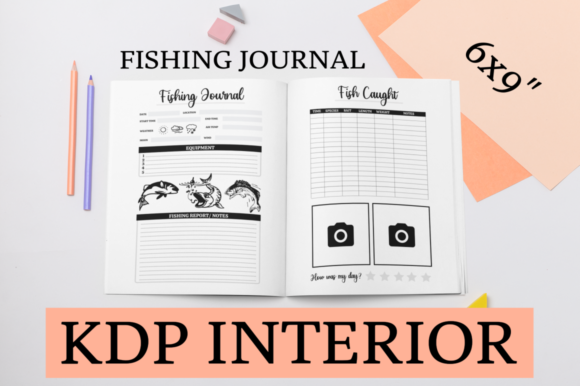
Creating a successful low-content book on Amazon requires more than just a catchy cover; the interior experience determines whether a customer leaves a five-star review or returns the product. The Fishing Journal KDP Interior is designed specifically to bridge the gap between a generic notebook and a specialized tool for anglers. This pre-formatted template eliminates the technical guesswork of book layout, offering a 121-page structure that is tested and verified for Kindle Direct Publishing standards. With a standard 6 x 9 trim size and no bleed configuration, this resource allows publishers to focus on niche research and marketing rather than spending hours adjusting margins or fixing pagination errors.
Technical Specifications and Print Readiness
For self-publishers, technical compliance is the foundation of a viable product. This Fishing Journal KDP Interior arrives as four distinct PDF variants, providing flexibility depending on your specific publishing strategy or A/B testing needs. The 6 x 9 trim size is widely considered the industry standard for field journals because it balances portability with adequate writing space. It fits easily into tackle boxes, backpacks, and boat storage compartments without feeling cumbersome.
The "no bleed" specification is particularly important for creators new to KDP. Bleed issues are among the most common reasons for manuscript rejection or poor print quality where text gets trimmed off the edge. By utilizing a safe margin design, this interior ensures that all prompts, lines, and tracking tables remain fully visible after binding. The 121-page count hits a sweet spot for perceived value; it is substantial enough to justify a competitive price point but light enough to keep printing costs manageable, preserving royalty margins for the publisher.
Perspectives for Low-Content Publishers
Entrepreneurs and marketers approaching this niche understand that saturation is a concern in the fishing category. However, specificity wins over generality. A blank lined notebook competes with millions of others, but a structured journal with dedicated fields for water temperature, bait type, moon phase, and catch weight serves a functional purpose. For business owners, this Fishing Journal KDP Interior represents a scalable asset. Because the file is ready to upload, the time-to-market is significantly reduced. This speed allows publishers to test multiple cover designs against the same high-quality interior to see which aesthetic resonates best with the angling community.
Commercial viability also depends on user retention. If an angler finds the layout intuitive, they are likely to purchase another volume once the first is filled. The four included variants allow publishers to create a series or offer different layouts for different types of fishing, such as freshwater versus saltwater, without redesigning the core mechanics of the book from scratch.
Practical Utility for Anglers and Hobbyists
While publishers need technical reliability, the end consumer needs practical utility. Adult hobbyists and recreational fishers use journals not merely as diaries, but as data collection tools. Modern fishing involves pattern recognition. An experienced angler uses this type of interior to track variables over seasons. When a journal provides structured prompts, it encourages the user to record details they might otherwise forget, such as barometric pressure or specific lure colors. Over time, this transforms the book into a personal reference guide that improves future success rates on the water.
For beginners, the structure serves an educational role. Learning to fish involves mastering numerous variables simultaneously. A well-designed Fishing Journal KDP Interior acts as a checklist and a learning scaffold. Instead of staring at a blank page, a novice is prompted to observe their environment systematically. This guided reflection accelerates the learning curve, helping new anglers connect cause and effect between conditions and results. The inclusive design ensures that whether the user is twenty or fifty, the interface remains accessible and non-intimidating.
Evaluating Quality and Presentation
Different users prioritize different aspects of a journal's presentation. For the gift-giver or the consumer buying for themselves, visual clarity is paramount. The interior must be legible in various lighting conditions, including bright sunlight on the water or dim cabin lights. High-contrast formatting and clean typography are essential features that distinguish a professional product from an amateur creation. The tested nature of this template means that font sizes and line weights have been optimized for standard KDP paper stock, preventing ink bleed-through and ensuring a crisp appearance.
Flexibility is another priority for diverse audiences. While some anglers want rigid data tables, others prefer space for sketching rig setups or mapping fishing spots. The inclusion of four variants addresses this need for versatility. A professional guide might require a log-heavy version to track client trips and inventory, while a weekend hobbyist might prefer a version with more freeform note-taking space. Evaluating which variant to publish—or whether to bundle them—requires understanding the specific sub-niche you intend to serve.
Strategic Considerations for Creators
For educators, bloggers, and content creators in the outdoor space, this journal can serve as more than just a standalone product. It can function as a lead magnet, a course companion, or a branded merchandise item. A fishing instructor might use the structured pages to teach students how to log their progress effectively. In this context, the reliability of the interior is critical; the educator cannot risk handing out a resource that looks unprofessional or contains formatting errors. Using a pre-tested template frees up mental energy to focus on curriculum development and student engagement.
Freelancers and designers evaluating this product should consider the opportunity cost of DIY design. Creating a 121-page interior with consistent headers, footers, and table structures requires significant software proficiency and time. Even for skilled designers, the testing phase can be tedious. Utilizing a verified Fishing Journal KDP Interior allows these professionals to bypass the production bottleneck. This is particularly relevant for those managing multiple niches or running a publishing business as a side hustle alongside other freelance commitments.
Matching the Product to Your Goals
Determining whether this specific interior aligns with your objectives requires honest assessment of your target audience and resources. If your goal is to create a highly customized, full-color coffee table book with glossy photos interspersed between text, a no-bleed black-and-white template will not suffice. However, if your objective is to launch a functional, utilitarian field guide for active use, this format is ideal.
Consider the skill level of your intended reader. Advanced tournament fishermen may demand specialized metrics not included in a generalist template. Conversely, a family-oriented camping and fishing journal benefits from simpler, broader prompts. Review the four provided variants to ensure at least one matches the complexity level of your niche. The value proposition here is efficiency and compliance; it solves the technical hurdles of KDP publishing so you can concentrate on connecting with the angling community through relevant covers and marketing.
Ultimately, the success of any low-content book relies on the intersection of market demand and product quality. This Fishing Journal KDP Interior provides the quality baseline necessary to compete. Whether you are a seasoned publisher expanding your catalog or a hobbyist sharing your passion, having a reliable, print-ready foundation ensures that the final physical product meets the expectations of modern consumers. For those interested in exploring additional layouts and niche-specific interiors, subscribing to the creator profile offers access to a growing library of resources updated regularly to match evolving market trends.